What is Customer Retention?
Customer retention refers to the percentage of customers a company retains over a given time period, indicating how well a company can keep its customers from churning. It is a critical aspect of business strategy, especially for companies that rely on recurring revenue from existing customers, such as SaaS.
Customer retention numbers reflect a number of key business performance metrics, including:
- Revenue Stability: Retained customers provide a stable source of revenue.
- Cost Efficiency: Acquiring new customers is most times more expensive than retaining existing ones.
- Customer Lifetime Value (CLV): Retained customers typically have a higher lifetime value, contributing more to the company’s revenue over time.
- Brand Loyalty: High retention rates often reflect strong customer loyalty and satisfaction, which reinforces the brand’s reputation in the market.
What is the Formula for Calculating the Customer Retention Rate?
Customer Retention Rate = [(Number of Customers at End of Period – Number of New Customers Acquired During Period) / Number of Customers at Start of Period] * 100
For example, let’s say a SaaS company offering workplace productivity tools has the following customer activity over a quarter:
Start of Quarter (S): 1,000 customers
End of Quarter (E): 1,200 customers
New Customers Acquired (N): 300 customers
The calculation would be:
CRR= 1200-300 / 1000 x 100 = 90 percent
The CRR is 90 percent for this company during this quarter.
What is a Good Customer Retention Rate?
What could be classified as a good customer retention rate varies by many factors, including the industry, business model, and market conditions. However, the goal for any industry is to maintain a high retention rate to sustain growth and profitability.
Customer Retention Rate by Industry
SaaS (Software-as-a-Service): Retention rates could be anywhere from 85% to 95% in the SaaS industry. Companies with excellent customer support, clear product-market fit, and strong onboarding and engagement strategies experience higher retention rates.
Telecommunications: Retention rates run between 75% and 90%, with customer loyalty programs positively impacting retention and high competition that could cause significant churn.
Financial Services: Financial services see retention rates between 80% and 95%, with long-term financial products like mortgages and insurance policies that are crucial for retention. High switching costs are also a contributing factor to higher retention rates.
Factors That Affect Customer Retention Rate
- Customer Lifetime Value (CLV):
- Businesses with high CLV stay with the brand for longer periods and make repeat purchases which contributes to a higher overall company value.
- Customer Acquisition Cost (CAC):
- If acquiring new customers is expensive, a high retention rate is critical for profitability.
- Business Model:
- Subscription-based businesses operate on a recurring revenue model with predictable revenue streams, so customer retention is critical for sustained revenue.
- Transactional businesses may see lower retention but focus on increasing repeat purchases.
What are the Benchmarks to Strive For?
- Best-in-Class Businesses: These businesses often outperform average retention rates by 35% to 40%.
- Growing Businesses: Prioritize increasing retention to align with benchmarks as the business matures. Early-stage businesses should target between 20% and 30% retention, scaling businesses should aim for 40% to 60%, and mature businesses should have a goal of 70%+ retention.
How to Determine If Your Retention Rate is Good?
Compare to Industry Averages: Research competitors and industry standards.
Assess Profitability: Ensure your retention rate allows for sustainable growth.
Customer Segmentation: Evaluate if retention rates differ in low-value vs. high-value customer segments.
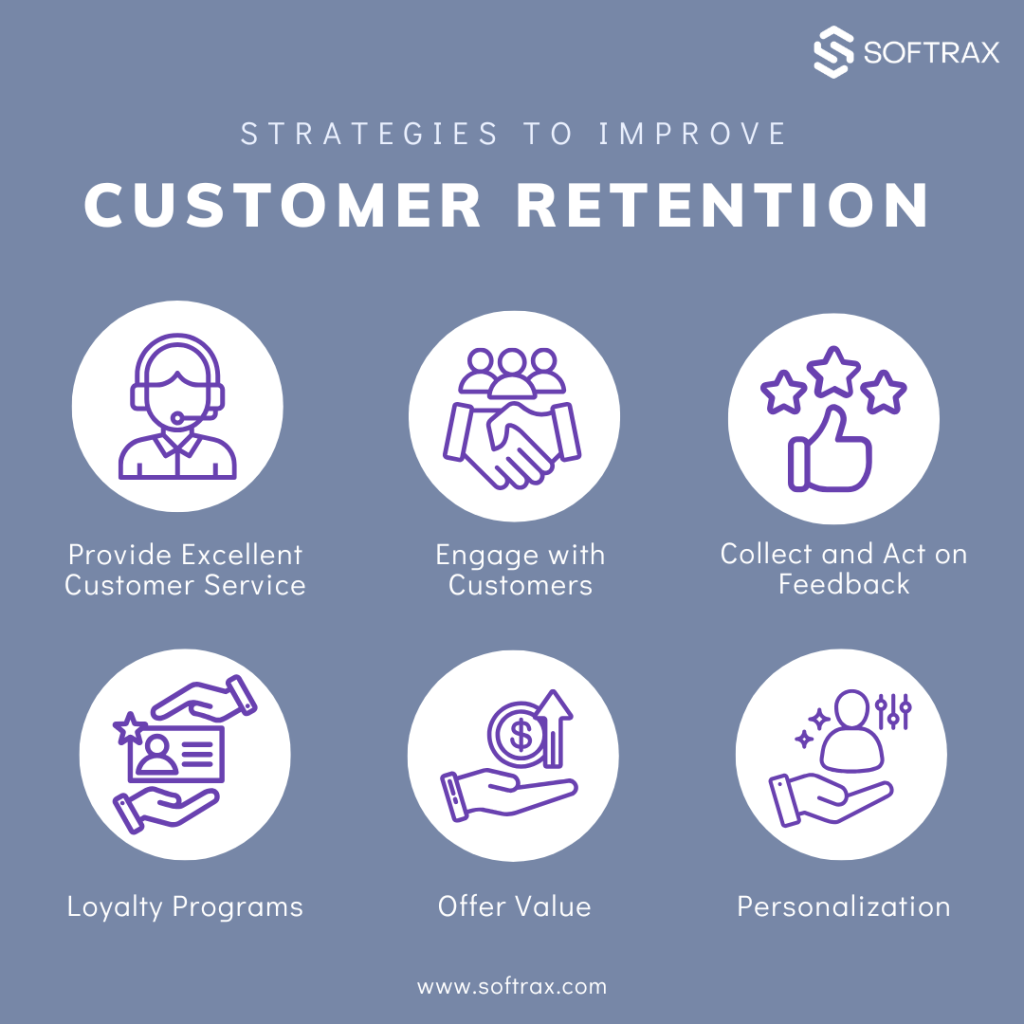
What are Strategies to Improve Customer Retention?
Provide Excellent Customer Service: Ensuring customers have a positive experience with the company is a good base for customer retention.
Engage with Customers: Regular communication and engagement help keep customers informed and involved.
Offer Value: Continuously provide value through high-quality products, services, and features.
Loyalty Programs: Implement programs that reward repeat customers can improve customer retention.
Collect and Act on Feedback: Use customer feedback to improve products and services.
Personalization: Tailor marketing and service efforts to meet individual customer needs and preferences.
What are the Benefits of High Customer Retention?
Increased Revenue: Retained customers contribute to consistent revenue streams.
Better Customer Insights: Long-term customers provide valuable insights that can help refine marketing strategies and product development.
Enhanced Reputation: High retention rates can boost a company’s reputation, making it more attractive to potential customers.